Sustainability & Impact
Specialist UK and European real estate finance delivering tangible social, environmental and economic impact.
Place making
We recognise the impact of construction and the occupation of buildings on energy consumption and emissions and we promote sustainable practices across our business and the developers to which we lend.
- Capital to SME developers delivering affordable, energy-efficient and sustainable developments
- Supports high-quality buildings, stimulates local economies and accelerates the transition to a lower-carbon built environment
- Environmental and social impact: sustainable communities, greener homes (via our Low Carbon Lending Programme) and modern, energy-efficient commercial buildings supporting employment and productivity
- Economic contribution: construction jobs, regional multiplier effect from real estate development, increased tax receipts and leisure/community spend

Placemaking case study: Obsidian Developments, Llanarth
Providing development finance to local housebuilder Obsidian Homes.
Watch our developer interview to understand what impact means to a local developer.

Social
- Creating sustainable communities
- Supporting existing Infrastructure – schools, parks, healthcare
- Enhancing life quality

Environmental
- Greener Housing with Pluto Low Carbon Programme
- Urban Regeneration
- Building Repurposing (90% of our development lending is on brownfield sites)

Economic
- Jobs supported (52,125 equivalent*)
- Infrastructure contribution (£94m equivalent*)
- Boost of Economy (£3.3bn Multiplier & £400m tax receipts*)
- Community Regeneration (£13.5m boost in Open Space, Community & Leisure*)
*House Builders Federation, Economic Footprint of Home Building in England and Wales, based on over 15,000 homes financed by Pluto to date
Pluto Finance Baseline Impact Report
The impact of delivering new affordable homes in a market that is structurally undersupplied is clear, but it's when you dig a little deeper that you get to understand the real place-based impact. We enlisted the support of impact consultant, The Good Economy, to independently review our flagship strategy.
The report provides a clear foundation for understanding where we are now and how progress will be tracked over time.
Produced independently for Pluto by The Good Economy (independent advisory firm specialising in impact measurement and management) it is the first independent impact report for any Pluto Finance vehicle.
It is a baseline report covering the period from the Fund’s inception in 2021 to 30 June 2025 and covers the residential impact of our flagship strategy.
The report is based on TGE’s independent assessment of Pluto Finance’s performance both against its stated Impact Themes and whether any measurable changes are taking place in outcomes being experienced by people, places and the planet.
Recycling private debt for greater impact
Private debt is a critical component in the government’s plan to build 1.5 million new homes, with the ability to recycle capital having a compounding effect on the number of new homes built.
The reason lies in how development lending works. A loan is typically repaid within 18–24 months once homes are built and sold. Unlike equity investment, where capital stays locked in the completed asset, the repaid loan and is lent out again to finance the next development through an evergreen structure. The same capital can therefore fund a succession of projects rather than one.
The effect compounds over time. Reinvesting £50m of debt over a ten-year period can support materially more developments and construction jobs than a buy-and-hold approach or equity investment alone. This capital efficiency maximises real-world outcomes, affordable homes, regional economic growth, local regeneration and SME construction job creation, while maintaining disciplined risk management.
The compounding effect can go further still: where interest earned is reinvested alongside the returning capital, each cycle builds on the last, extending the reach of the original investment with every redeployment.
Low Carbon Lending Programme
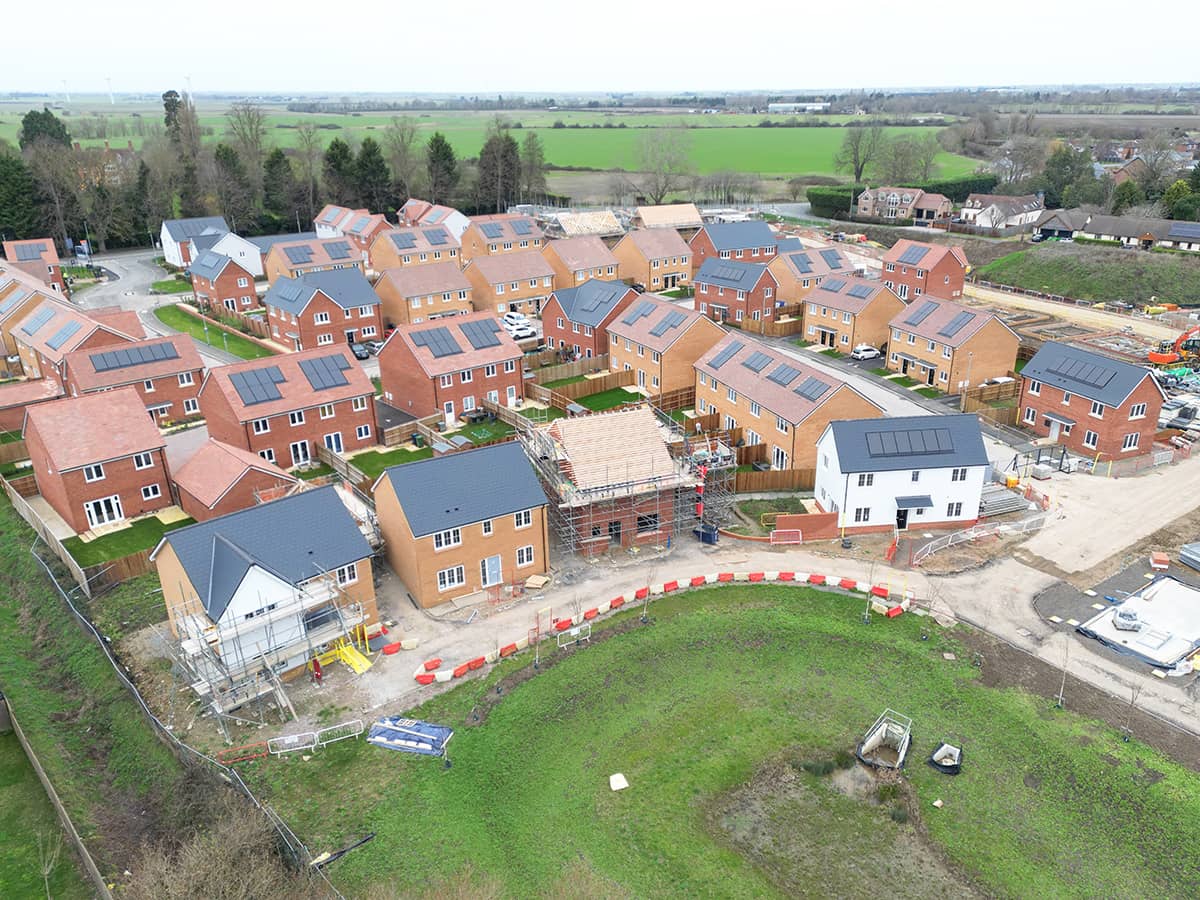
Pluto Finance’s Low Carbon Lending Programme is central to our commitment to sustainability, where our goal is to support the reduction of carbon emissions in the built environment and the developers that strive to reduce the carbon footprint of the homes they build.
We offer green loan discounts for developments that achieve defined carbon-reduction targets measured in terms of both embodied carbon (emissions associated with construction) and operational carbon (emissions during occupation). Eligibility is assessed towards the end of construction, based on verified carbon performance.
Our aim is to promote developments that both meet commercial objectives and contribute to low-carbon construction and long-term environmental resilience. By aligning debt financing with low-carbon schemes in this way, we not only support the financial success of developers but also contribute to their reputation as industry leaders.
Flexible structures. Institutional standards.
From aggregated vehicles to bespoke managed accounts, our strategies are designed to meet the deployment and governance requirements of sophisticated institutional investors.